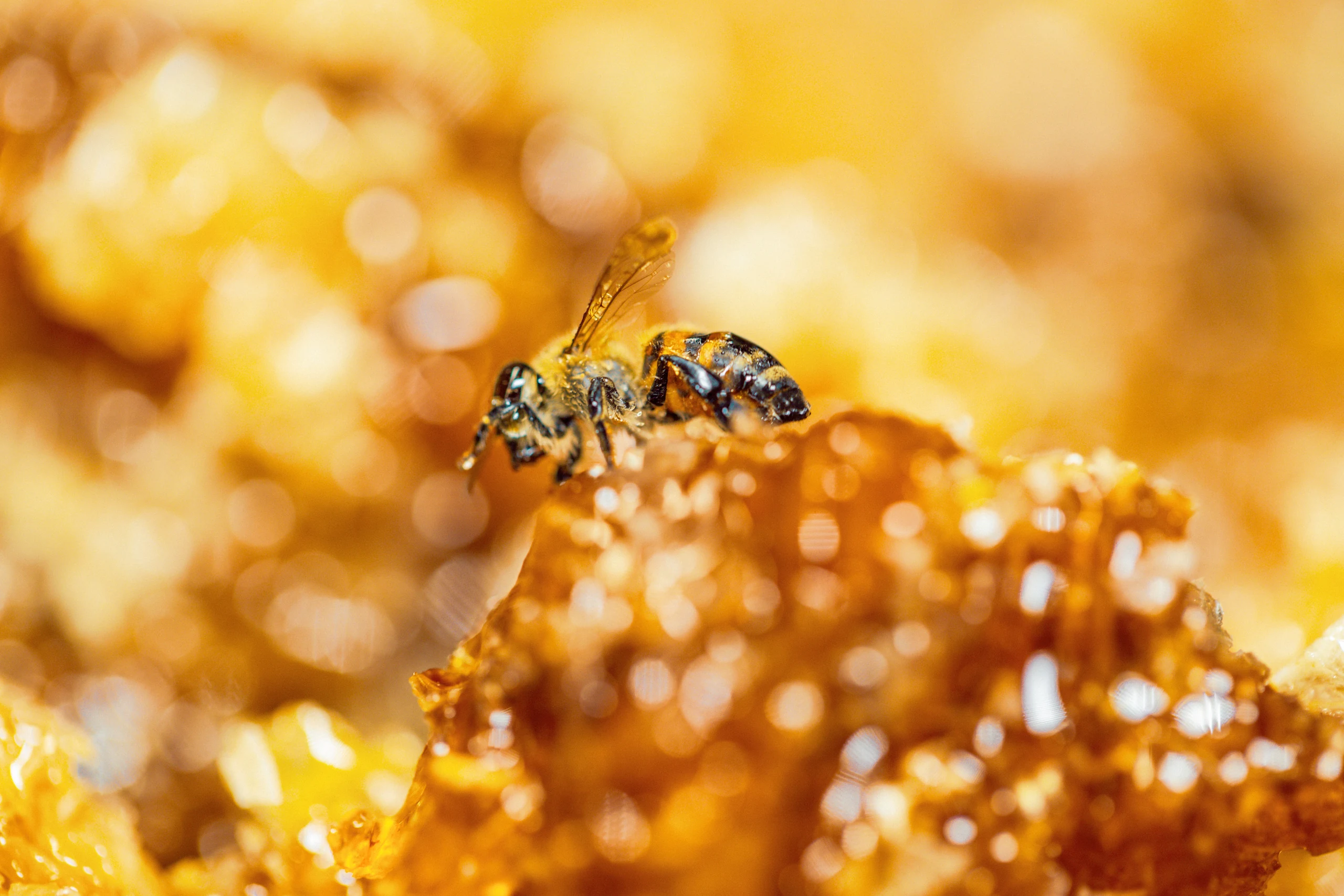
A bee on honeycomb

Our process

Traceability

One story. Hive to drum.

Each beekeeper and each bucket is assigned a QR code and tracked through a cloud database from registration onward. Every transaction — bucket assigned, harvest returned, quality check, payment, transport, processing — is a scan against that code.

So every drum resolves back to named beekeepers, their apiaries and their hive sites.

We test the system rather than assume it works. A full traceability exercise is run every year as part of a mock recall, tracing finished honey back to its contributing beekeepers.

Our certifications and food safety

With a traceable code for every bit of comb, we process and facilitate export of honey.

Steps 01 to 04

Quality is decided in the forest

Isabell von Oertzen talking with an Upendo field officer

Field officers run the harvest on the ground

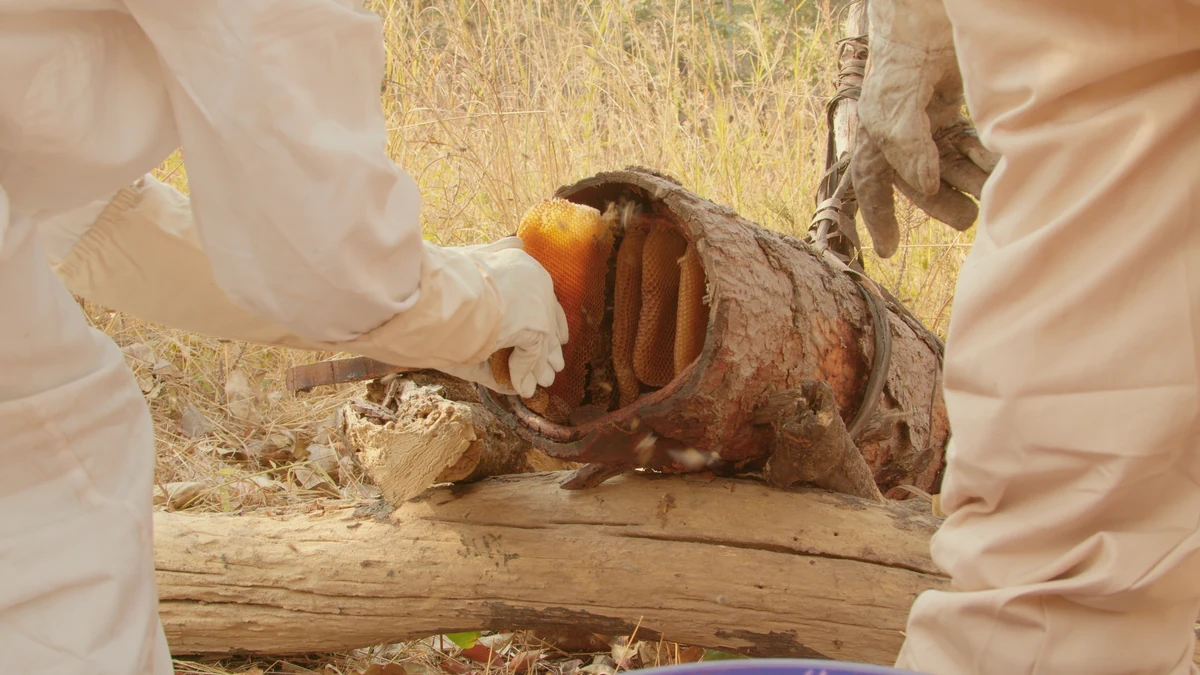
Our field officers work closely with beekeeper communities. Before each harvest, field officers meet with beekeepers to set quality standards, prices and what to expect from the season, and register and train beekeepers who are new to the programme.

Field officers are the bridge between the beekeepers and our processing facility, working with beekeepers all year round, not only at harvest time.

Field officers check registration details, hive locations and expected harvests, and record them in our traceability system. They use these estimates to plan bucket distribution, with each bucket linked to the beekeeper who receives it. They also train beekeepers in organic requirements, hygiene, sustainable harvesting and safe storage, and inspect hive sites to check that these practices are followed.

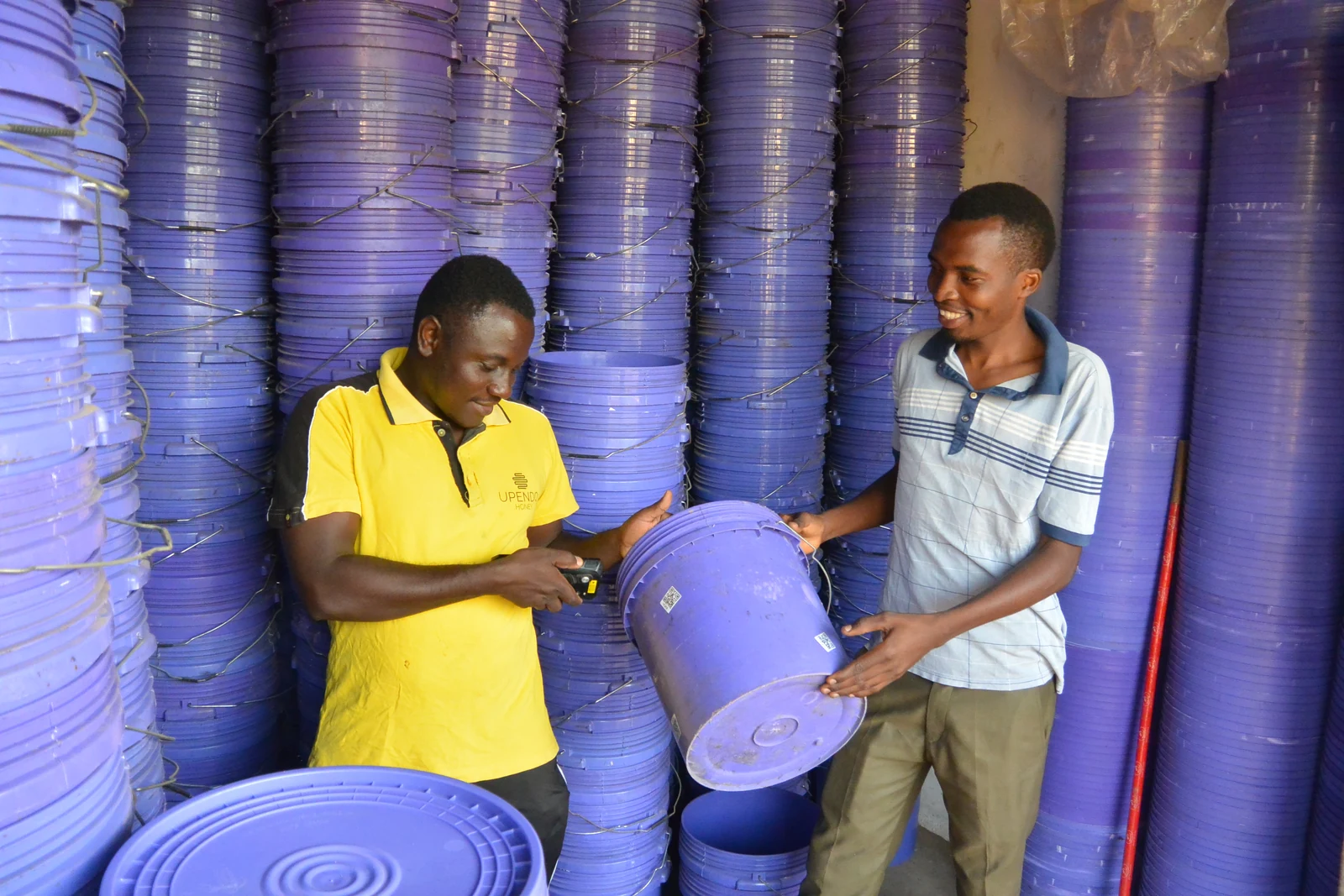
Two field officers tagging a honey bucket

Checked before it leaves the beekeeper

Field officers meet beekeepers at collection, and the first quality check happens at the site of production rather than at the factory gate. Comb is assessed on smell, taste, colour and water content, then weighed, and the payment request is entered into the system on the spot.

A bucket is turned away at this stage for smokiness in the smell or taste, too much water, or insects in the comb. Doing the check in the field means the beekeeper is paid the same day for what is accepted, and hears face to face why anything was not.

Every bucket carries a QR code tied to the beekeeper who filled it, and each accepted bucket is scanned before it leaves.

Step 05

Transport to processing

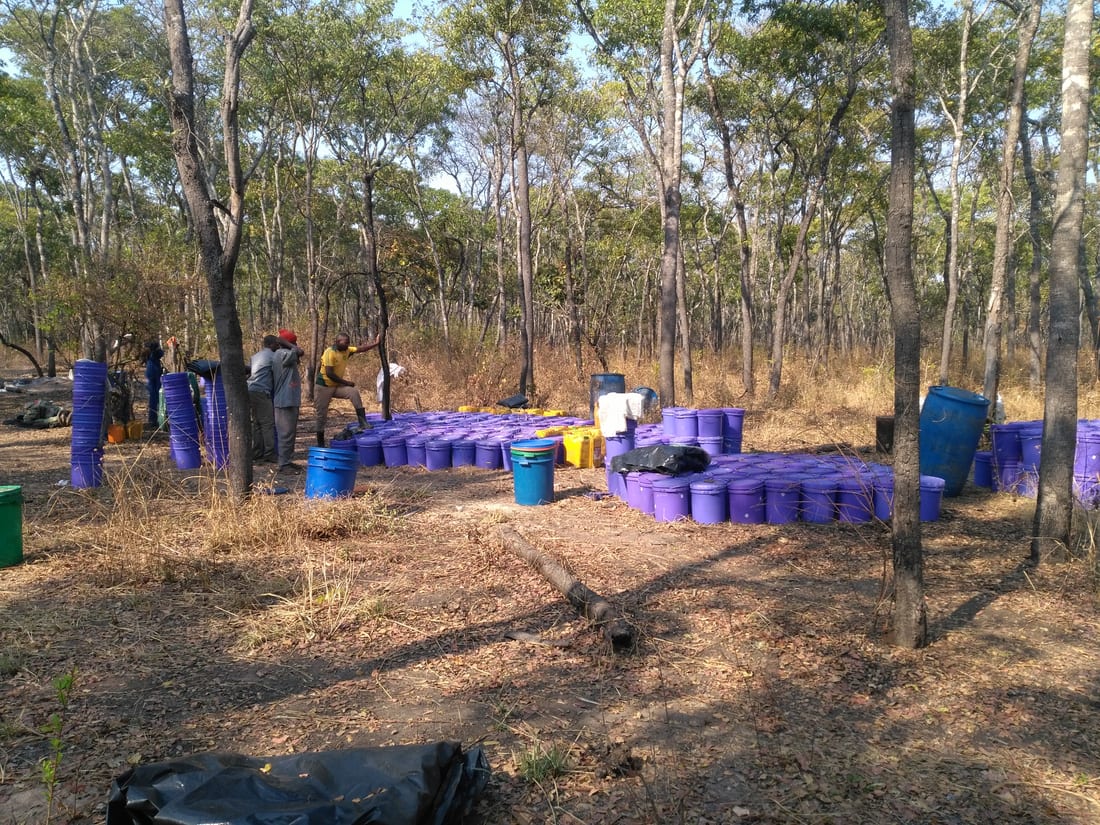
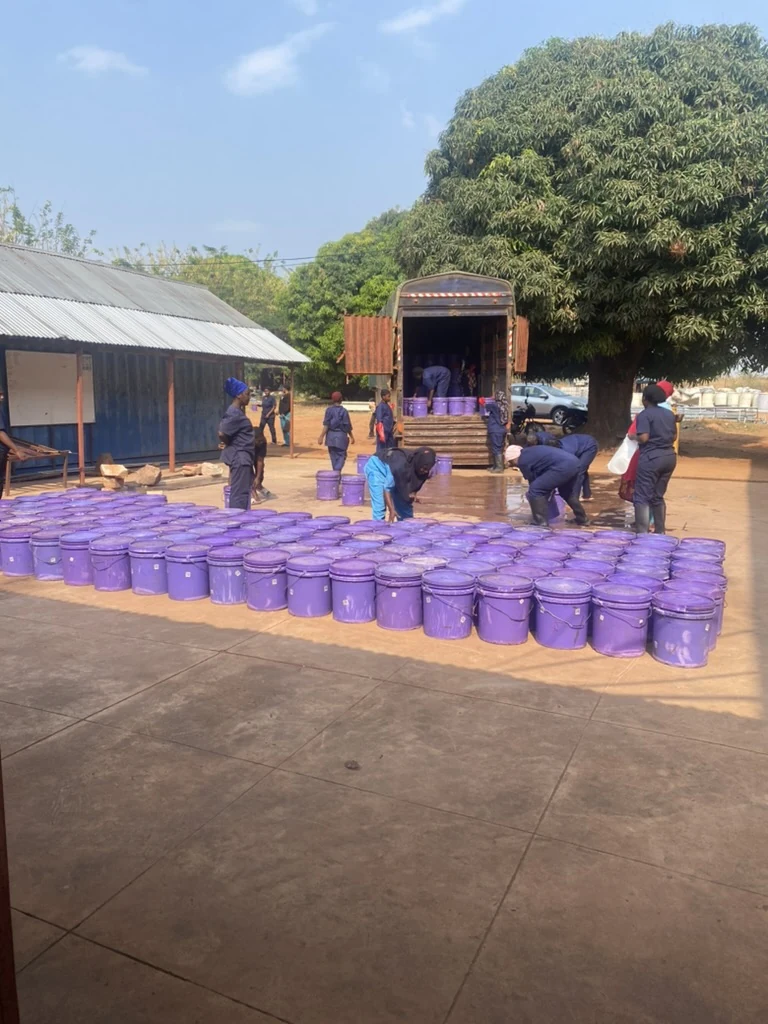
Purple honey buckets arriving at the Kigoma facility

Every bucket is checked again on arrival

Buckets are scanned out of the field warehouse and tracked during transport to our facility in the Kigoma Special Economic Zone. On arrival every QR code is scanned into our traceability system, so we know exactly which beekeeper and field officer worked with that honey.

A sample is drawn from each bucket, graded light or dark by eye so that honey of different colours is not blended by accident, tasted, and checked for water content. Anything that does not meet our standard is set aside before processing.

Nothing set aside is simply written off. Its QR code is tied directly to the beekeeper who supplied it and their field officer, and Upendo provides them with additional training and resources as needed.

Step 06

Processing and batch tracking

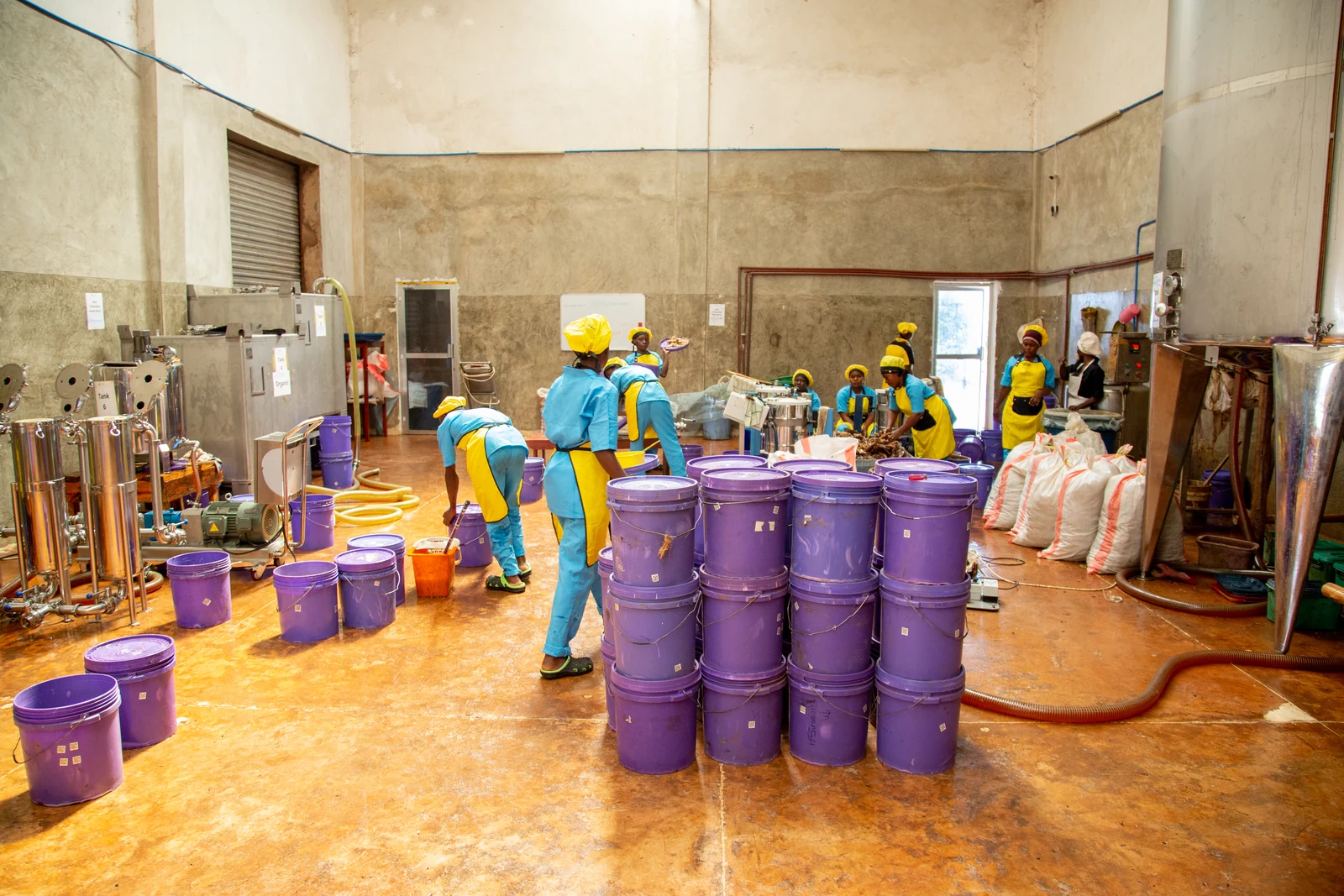
Honey buckets in the Kigoma processing hall

Centrifugal extraction, not pressing

Honey is gently warmed and the comb is spun in a centrifuge, stirred through to even it out, and spun again. Whatever remains is bagged as comb residue for the wax line.

Spinning rather than pressing matters. Pressure forces wax particles and comb debris into the honey; centrifugal force separates it cleanly and leaves the wax intact enough for recycling.

The honey is then filtered in three stages through stainless-steel equipment. Organic and conventional honey are never processed at the same time.

Homogenising for consistency

Extracted honey is combined in our homogenisation tank. Forest honey is naturally variable — every beekeeper, every stretch of woodland and every week of the season gives something slightly different — and a buyer ordering a container needs the last drum to match the first.

Once blended, the honey is sampled, and retention samples are kept after the honey is dispatched.

Step 07

Quality assurance

Independent testing

Independent testing in Bremen

We do not certify our own honey. Completed batches are sampled by our QA department and sent to Intertek Food Services GmbH in Bremen, Germany, an independent laboratory accredited by DAkkS, the German national accreditation body.

Testing in the destination market is deliberate. A European buyer can check our analysis against a laboratory their own auditors already recognise, using methods accepted there, rather than taking a certificate from Tanzania on trust.

Analysis covers pesticide and veterinary residues under EU regulations; botanical and geographical origin; and the trade parameters — HMF, moisture, pH, diastase and free acidity.

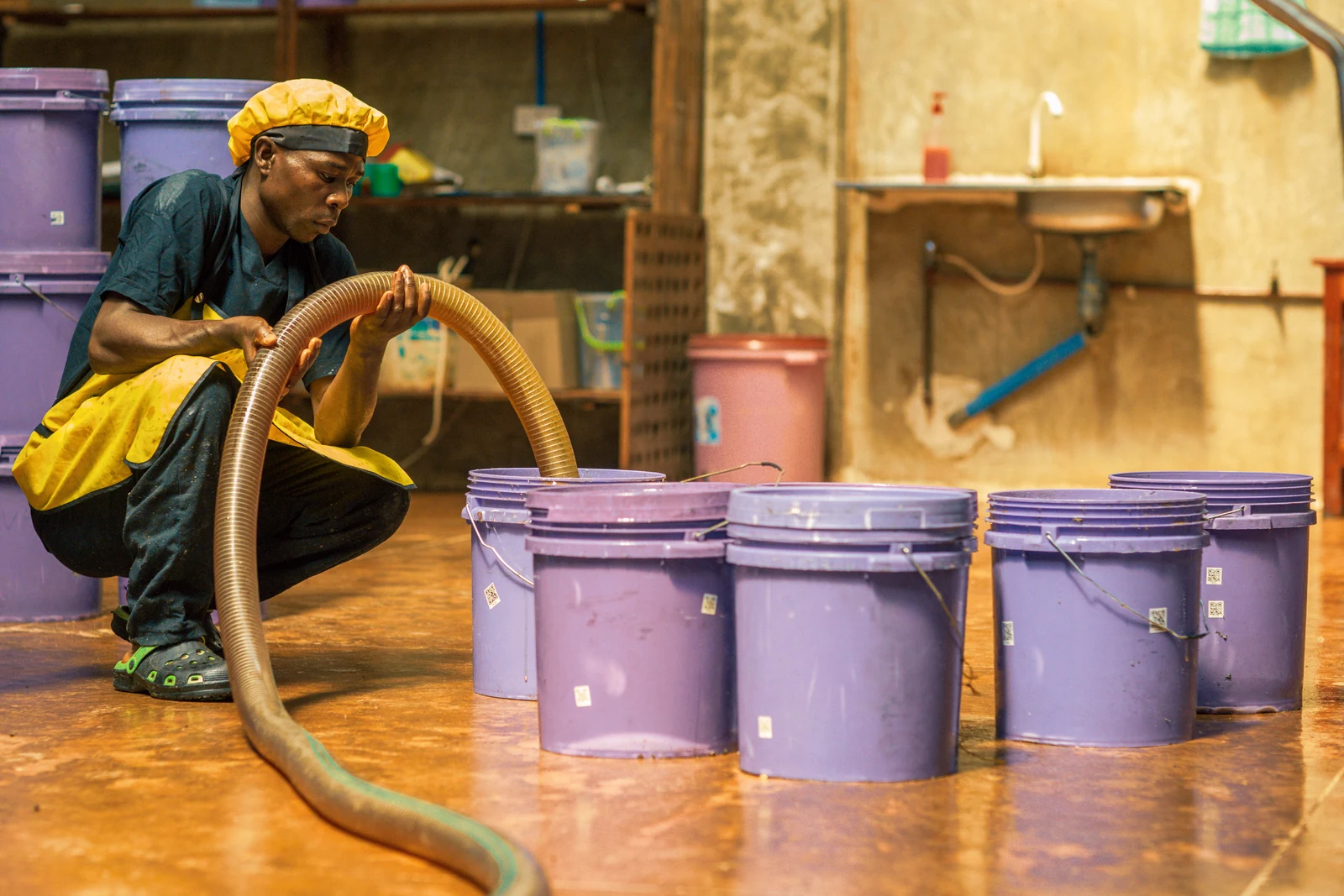
A processing team member working with hoses and purple buckets

Nothing goes to waste

We collect wax from the comb, melt it with steam, filter it and cast it into blocks.

Much of the wax across the region is processed unsustainably and with low quality by boiling comb in open water. We process it properly to maximise beekeeper income by ensuring their wax meets the requirements for industrial applications.

Step 08

Ready for export

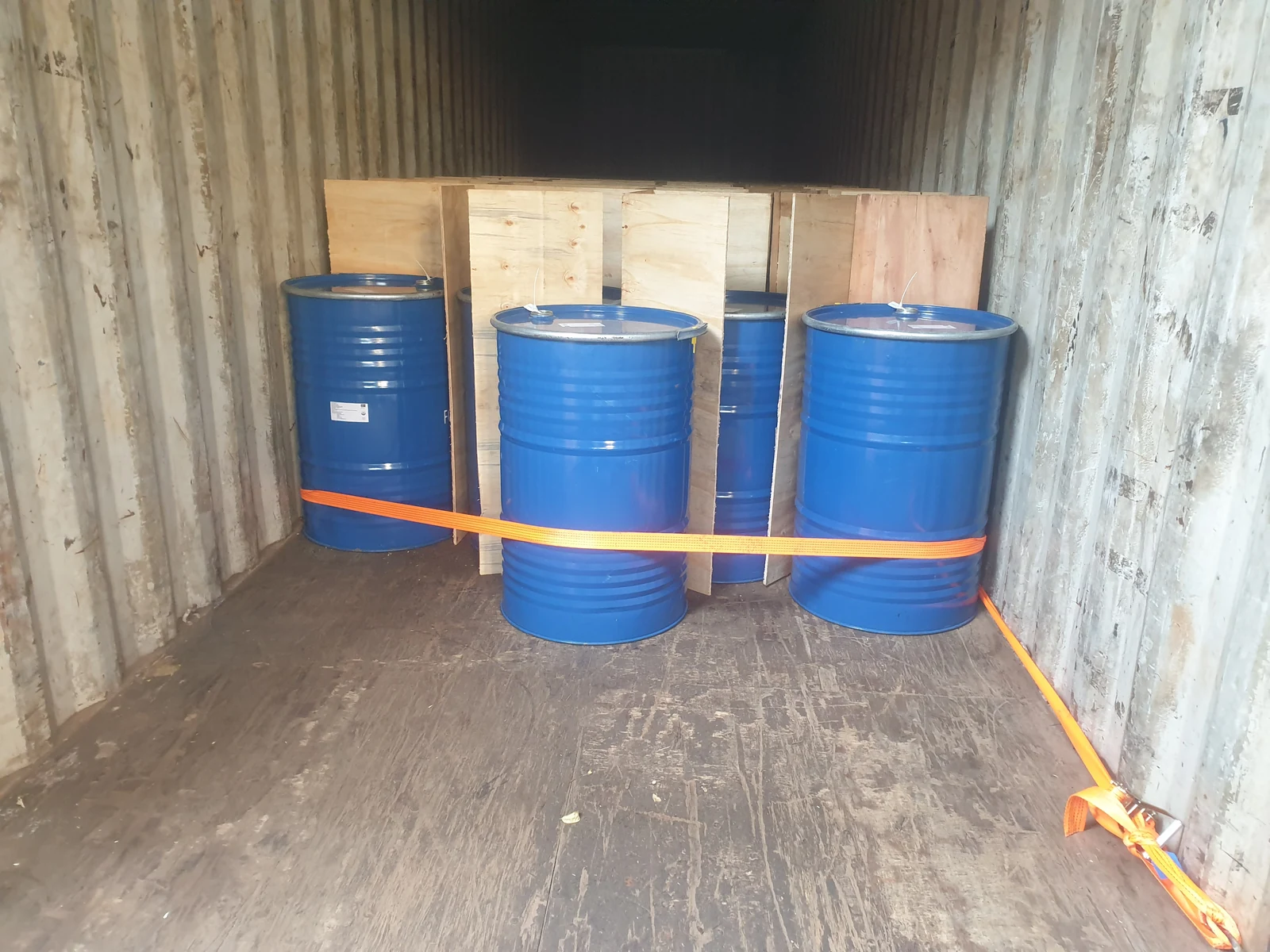
Blue honey export drums secured with orange straps and plywood inside a shipping container

New drums, every time

We fill new epoxy-lined, food-grade drums from accredited manufacturers with honey, or use IBCs according to buyer preference. We weigh, label and seal each container before moving it to the warehouse. We do not reuse drums.

The label carries the crop year, country of origin, the company and plant code, the manufacture date, the lot and drum number, the organic control body reference and the net weight — so a drum standing in a warehouse in Europe can be linked to its individual batch and beekeepers. This process ensures product transparency, eliminates lengthy sourcing inquiries, and inspires confidence in our customers.

Drums typically ship direct from Tanzania in containers to major ports worldwide.